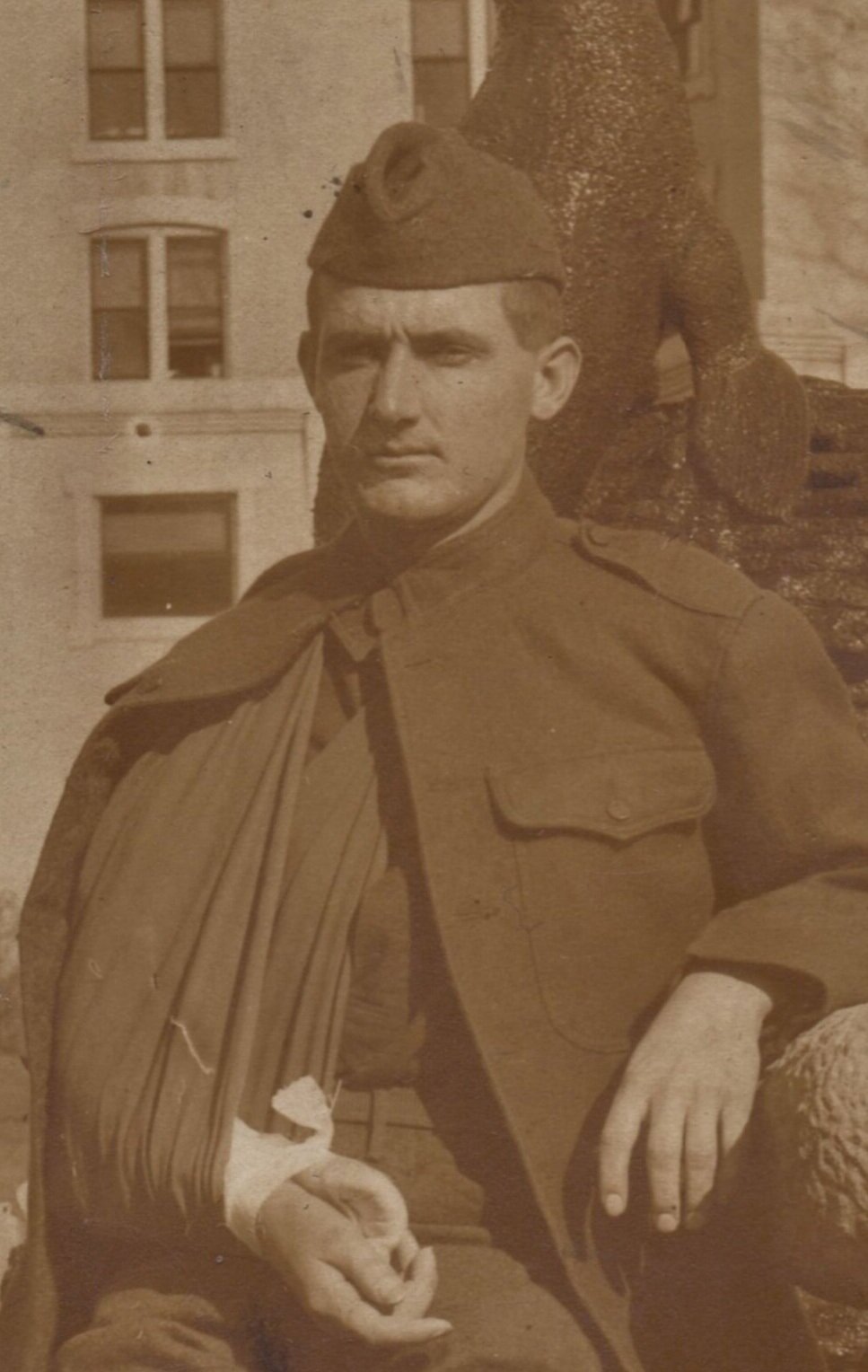
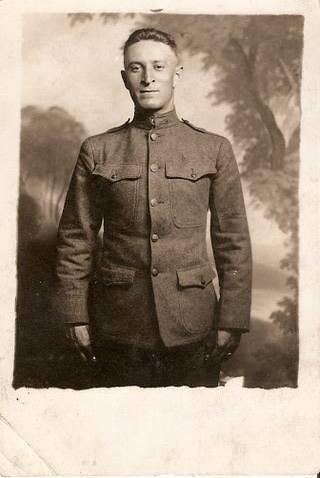
Carlton “Carl” Randall Monday was like many other men of Company I, 126th Infantry. They were primarily Michiganders from the middle of the state. Carl himself was from Harrison in Clare County. Having arrived in France in March 1918, Carl and the rest of the 126th, members of the 32nd Division, American Expeditionary Force, fought along the Marne and Vesle Rivers during the late Summer. By the end of September, they were on their way to reinforce the Meuse-Argonne Offensive, the largest and bloodiest battle the United States has ever taken part in. On the 30th the 32nd Division entered the line relieving the 37th Division and part of the 79th.
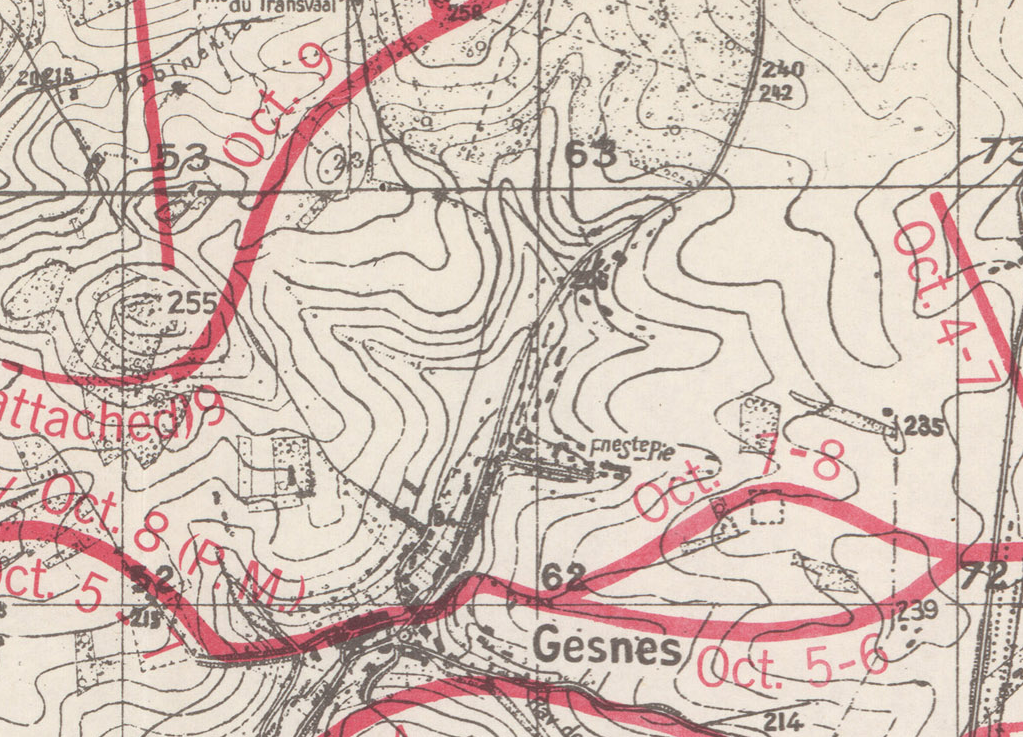
On the 1st of October, the 126th began to slowly probe forward from shell hole to shell hole towards the German positions around the town of Cierges. 10 men were killed, and 97 wounded, predominantly by German artillery which was firing large amounts of gas shells. The regimental history of the 126th describes their position on the 2nd:
“Early in the morning and again in the evening the Germans delivered a heavy artillery fire on our lines, which extended as far back as the regimental reserve positions, and between these bursts of hate, our lines were subjected to constant harassing artillery fire. This fire appeared to be due to nervousness on the part of the enemy and in anticipation of a renewal of the American attack; it was intended to have a demoralizing effect upon our troops, but the Second Battle of the Marne and the battle near Juvigny had made veterans of the men who survived those conflicts, and this harassing fire had little effect upon them. However, more than half the men had joined the regiment after those battles and were now under fire for the first time and it was very trying to them. Many of our new men had hardly any previous training in modern warfare and as they took their places in the line alongside of the older and experienced soldiers, they stood the ordeal splendidly and soon acquired that confidence which made them veterans within a very short time.[1]”
Heavy shelling continued for most of the 3rd. The American attack finally commenced on the 4th being led by two veterans divisions, the 3rd, and 32nd. The objective of the 3rd Battalion, 126th Infantry, which included Carl and the Doughboys of Company I was to take and hold Hill 255, part of the defenses around Gesnes and the heights around Romagne. Pressing forward through machine-gun and mortar fire Company I reached the crossroads of Gesnes. By the end of the day, 205 men of the 126th had become casualties. As darkness settled in and the fighting began to subside orders arrived to continue the attack the next day. “As the regimental history states: The orders directed that the attack be pushed with all possible vigor and continued to the limit of endurance.”
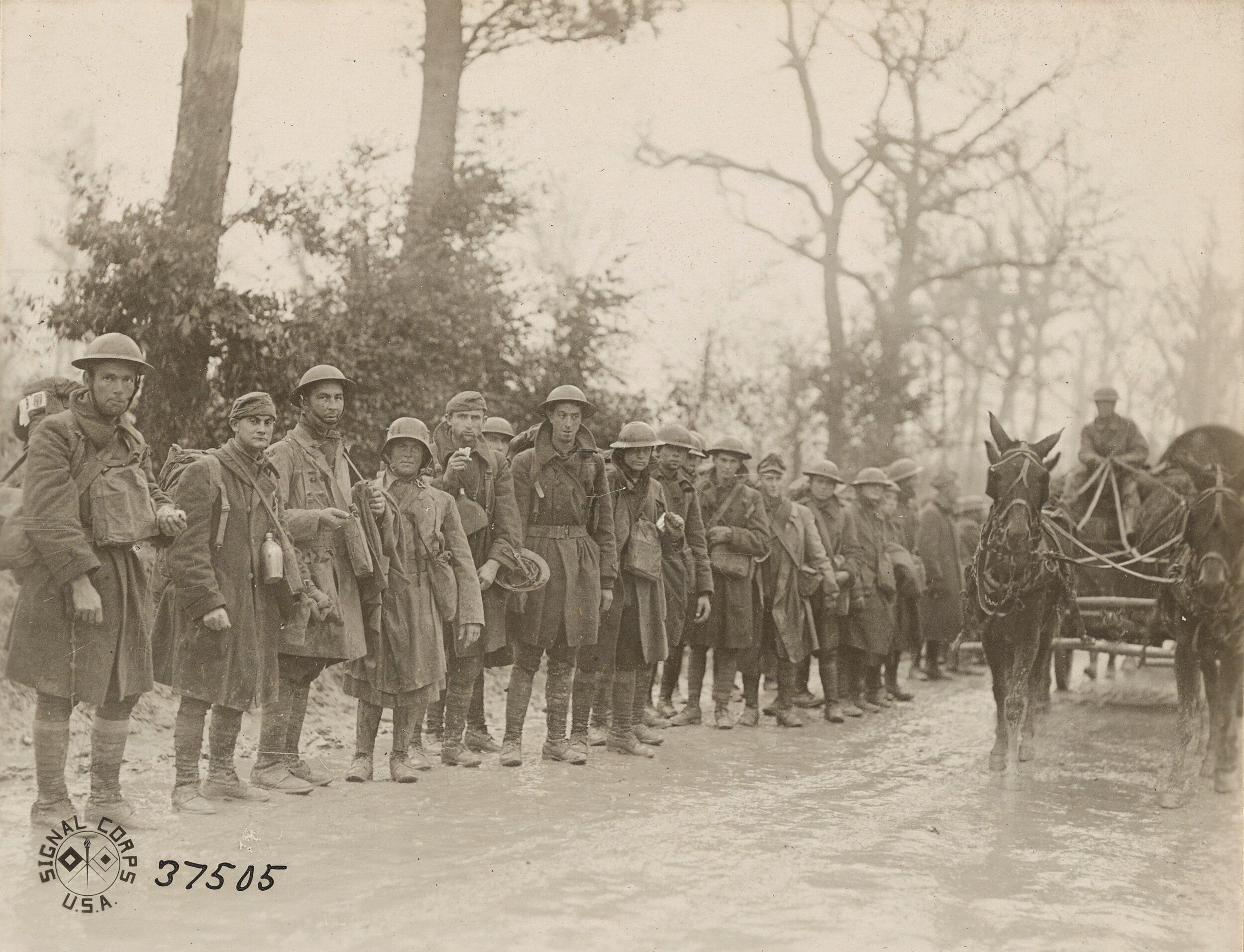
The attack on the 4th met with success. As the two other battalions of the 126th pushed forward, the 3rd Battalion with Company I in the lead moved 300 yards further behind a creeping barrage. They reached the embankment on the Romagne road. Individual acts helped the Michigan doughboys advance here just as in the rest of the Meuse-Argonne Offensive. Cpl. Clarence L. Hinkle of Morley, Michigan took his squad far in advance of the rest of Company I as he individually picked off German machine gunners. As the regimental history states:
“It was just such acts as this by many individual soldiers in the regiment that made progress possible against the Huns in this sector, who were all the time becoming more numerous and fighting in defense of the famous “Kriemhilde Stellung” as they had never fought before.[2]”
Around midnight on the 5th of October, the 126th was relieved by their fellow Wolverines of the 125th Infantry. They were held in reserve on the 6th, however, they remained under heavy artillery fire. After having survived the assaults of the previous days, it was during this time out of the front line that Carl Monday was wounded. From the heights around Romagne he was evacuated, his arm bandaged, and sent further back to a base hospital. By late November he was onboard a ship home, having survived the hell of the Meuse-Argonne.
[1] Emil B. Gansser, History of the 126th Infantry in the War with Germany (Grand Rapids, MI: 126th Infantry Association, 1920), p.171-173)
[2] Ibid., 177


 James Taub, Historian
Leave a comment