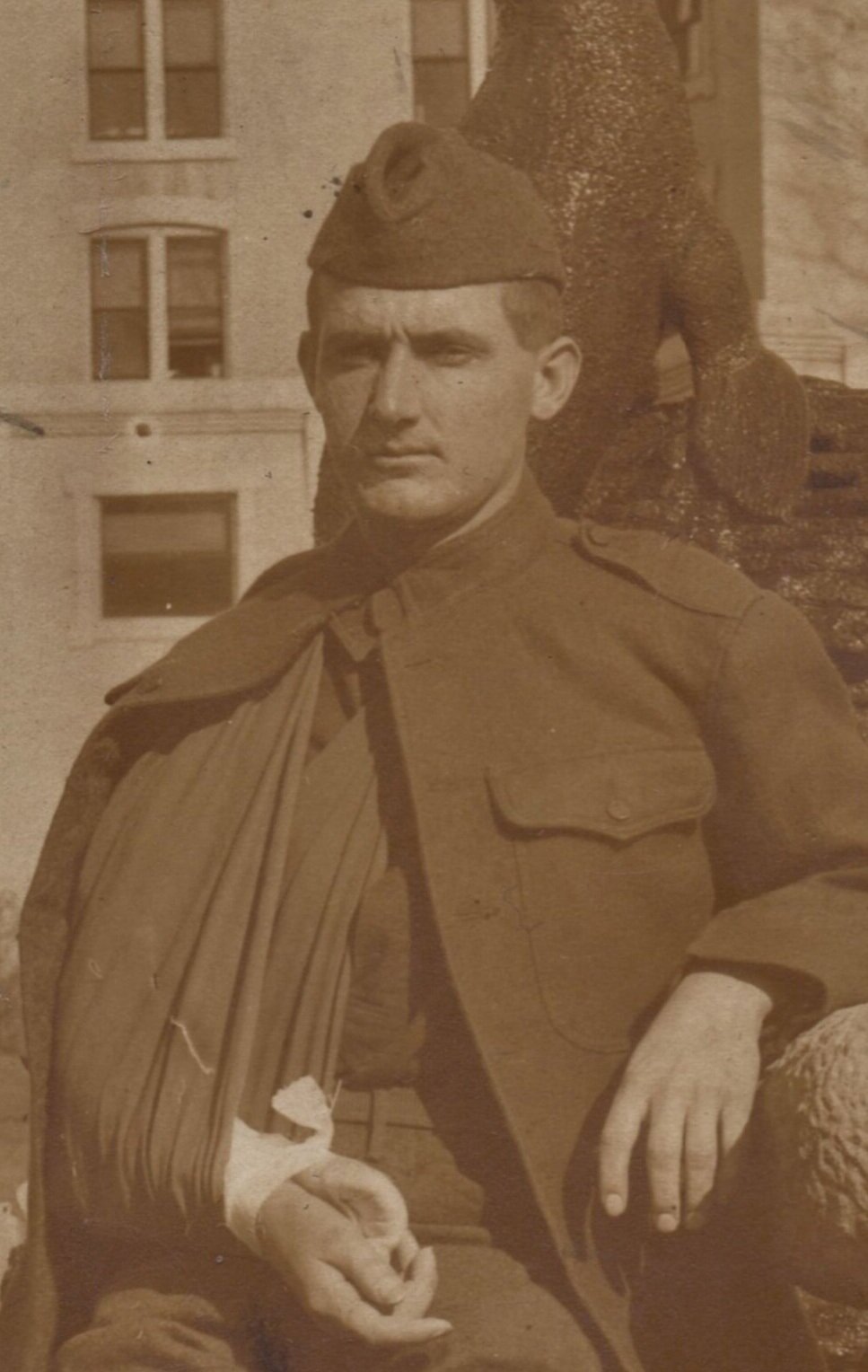
I recently obtained this photograph of Lt. Lucien Maurice Blaise, of the 50e Bataillon de Chasseurs à Pied (BCP). Lucien was born in Paris on the 6 August 1890. When the Great War broke out, Lucien was living in Épinal, the capital of the Vosges Department. He enlisted voluntarily (the vast majority of French soldiers were conscripted) with the 149e régiment d’infanterie. He was later commissioned into the elite light infantry battalions of the French Army, the Chasseurs à Pied (hunters on foot). As the 50e BCP was a duplicate battalion of the 10e BCP, it is likely that is where his official commission was listed before he was sent to the 50e, where he was posted to the Machine Gun Section.
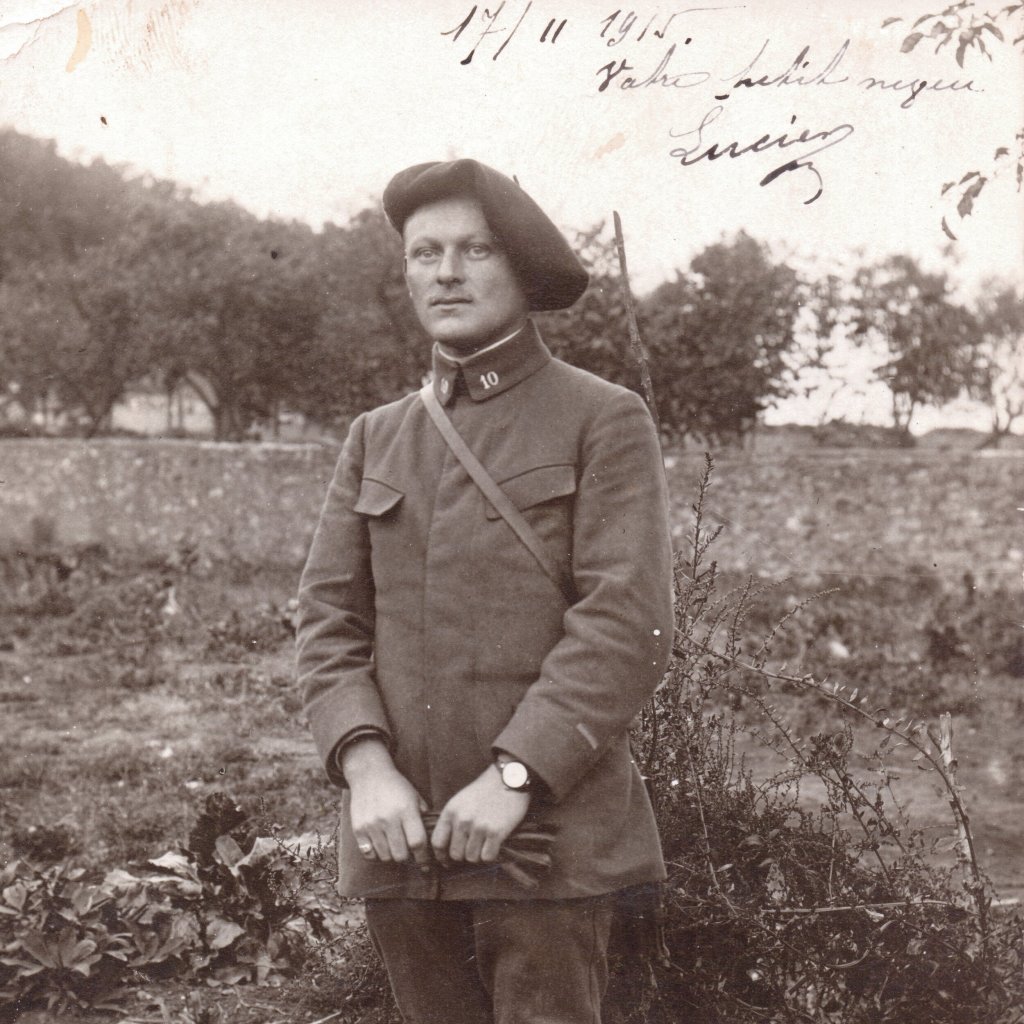
On October 24, 1916, the 50e was part of the French forces which recaptured Forts Douamount and Vaux during the latter stages of the Battle of Verdun. It was there that Lucien was wounded. Alongside Lucien, another Blaise, Lt George Blaise was commanding the Battalion’s detachment of Assault Pioneers. As the 1920 history of the 50e Chasseurs states:
“When the Battalion’s mission is announced, all hearts are set on fire, imaginations are high, but the resistance will be more serious than expected and the 50th will have to be content to write with their blood one of the noblest pages of its history.
On October 23, the Battalion was at Belrupt; it leaves this cantonment at 6.30 p.m. to return to the sector and occupy its positions in the starting trenches. On the 24th at 2 am, it is in place; during the night, the bombardment is relatively weak.
The time of the attack was set at 11:40 a.m. In favor of a fog that favors their march and despite the intensity of the bombardment, the chasseurs soar with joyful hearts. The first trenches are easily taken, many prisoners fell into our hands, the forward march continues to every moment more painful and the Battalion must stop in front of the “Petit-Dépôt” which is formidably defended. Already our losses are appreciable, a large number of chasseurs have fallen; the captain D’Hauezn and Lieutenant de Ribes have just been wounded; Captain Finet, a handsome soldier figure, with all the ardor of the cavalier he once was, has fallen gloriously at the head of his company; also fallen was brave second lieutenant Gault, hurriedly leaving the ambulance where he was a few days before the attack, to come and find the chasseurs he wanted to lead on the attack; so gloriously fallen the Lieutenant Blaise who, with the youthful ardor of his twenty years, sets out at the head of his pioneers.
Around 4 p.m., Commander Imbert, severely bruised, had to pass the Battalion command to Captain Magner. The chasseurs are approaching the fort, but they are stopped by heavy machine gun fire and the resistance offered to the 71st B.C.P. at the “Petit Dépôt”. Moreover, the numbers are reduced to 60 and 70 men per company; special teams of sappers, pioneers, grenadiers, are dislocated, the Battalion is eaten up before the moment when it should have attack the fort with all its means. At night, it organizes himself on the ground he has just conquered.
On the morning of the 25th, Captain Magner, wounded, passed command to Lieutenant Rousselot who, himself, a few moments later, fell seriously injured. Battalion Commander Imbert, who rejoins his unit, is ordered to move into reserve at Ouverage Rond: faced with the violence of the bombardment, this movement can only be carried out at night. Until 29 October, the Battalion will occupy the newly conquered positions and organize them. It is finally withdrawn from battle; it had lost in its attacks 11 officers and 150 chasseurs killed or wounded.”
Lt. Lucien Blaise would return to service with the 50e BCP. He would command the Machine Gun Company in 1917 and was specifically mentioned again for fighting at Verdun, and in Champagne. More research to be done, but quite an interesting Poilu!



 James Taub, Historian
Leave a comment